
Artificial Intelligence is becoming an operational reality. In the webinar “AI Agents: from vision to impact”, we explored how AI Agents are evolving from theoretical concepts into practical solutions that accelerate productivity, increase efficiency, and unlock new forms of collaboration.
What are AI Agents and why are they different?
AI Agents are autonomous systems that combine language models, decision logic, and integration with external tools to perform complex tasks. Unlike Robotic Process Automation (RPA) or traditional chatbots, these agents don’t just follow scripts: they plan, decide, and act adaptively, with reasoning and continuous learning capabilities. They are always supported by guardrails, auditability, and, when necessary, human intervention to ensure control and quality.
The real impact of AI Agents on productivity
Business productivity has traditionally been measured in terms of output per unit of time. With AI Agents, that metric takes on a new dimension: intelligent, contextual, and scalable output.
1. Faster execution speed
Operating 24/7 with light supervision and guardrails, AI Agents significantly reduce response times across internal and external processes. This is particularly relevant in areas such as technical support, logistics operations, or risk management.
2. Drastic reduction of repetitive tasks
AI Agents handle tasks that once required constant human intervention, such as data analysis, report generation, request triage, or administrative processing. This frees teams to focus on higher-value work like innovation, strategy, or customer relationships.
3. Scalability without proportional resource growth
One of the biggest advantages of AI Agents is horizontal scalability. As workloads increase, it’s possible to replicate or specialize in agents without needing to hire or train new staff.
4. More informed and contextual decision-making
AI Agents don’t just execute—they interpret data, learn from patterns, and suggest actions. This enables faster, evidence-based decisions that stay aligned with organizational strategy.
5. Continuous improvement through feedback and learning
Unlike rigid systems, AI Agents can be refined with human feedback, adjusting behaviors and improving performance over time. This creates a virtuous cycle of learning and continuous optimization.
Risks, governance, and compliance
Responsible adoption of agents requires a strong governance model to ensure data quality, hallucination mitigation, GDPR and privacy compliance, as well as high standards of security and auditability.
Operational metrics and SLAs, such as accuracy, latency, cost per execution, or escalation rates, are defined and tracked through continuous monitoring and alert mechanisms.
For critical scenarios, guardrails, human-in-the-loop integration, and contingency plans (fallback/rollback) are applied, including kill switches and read-only modes to ensure resilience.
Risk management is supported by up-to-date documentation, regular reviews, and adversarial scenario testing before moving to production, creating a solid foundation for trust and scalability.
Practical example: an agent supporting user story writing
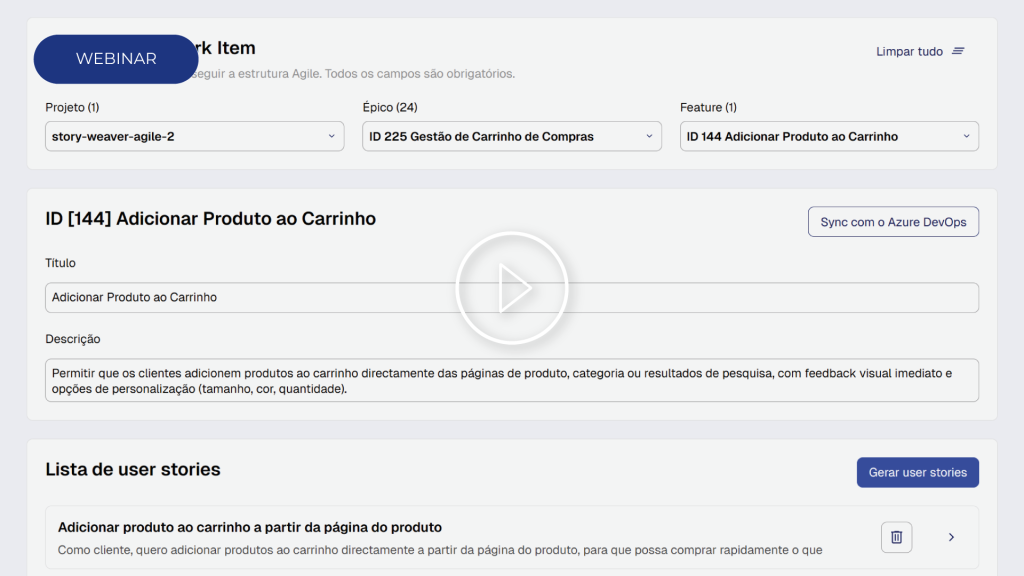
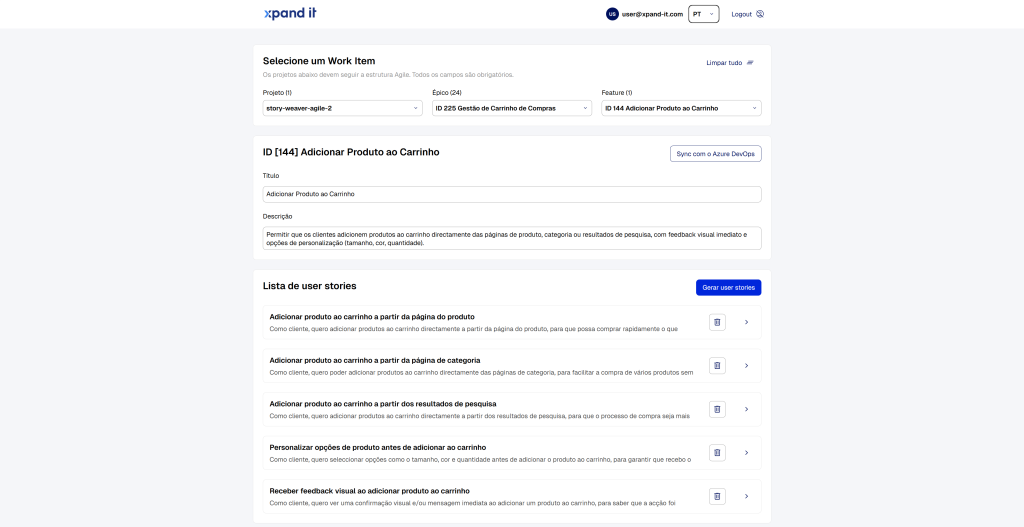
In one project, a specialized agent was implemented to support the writing of user stories and acceptance criteria. Through an intelligent interface, the agent guides users through the process, suggests consistent criteria, and validates critical aspects such as clarity, testability, and alignment with business objectives.
The solution integrates directly with tools the team already uses, such as Azure DevOps, logging suggestions directly into user stories. It also applies automatic validations for terminology, ambiguity, and dependencies, always supported by guardrails and human review when necessary.
The typical flow is simple: the user describes the functionality, the agent proposes user stories and acceptance criteria, and the user validates before publishing. The impact is immediate: faster and more consistent writing, less rework during implementation, and greater predictability in product planning.
Conclusion: from vision to impact, with purpose
The adoption of AI Agents is an opportunity to rethink the way we work. With the right technology and an impact-driven approach, organizations can transform operations, accelerate innovation, and deliver smarter experiences for both employees and customers.